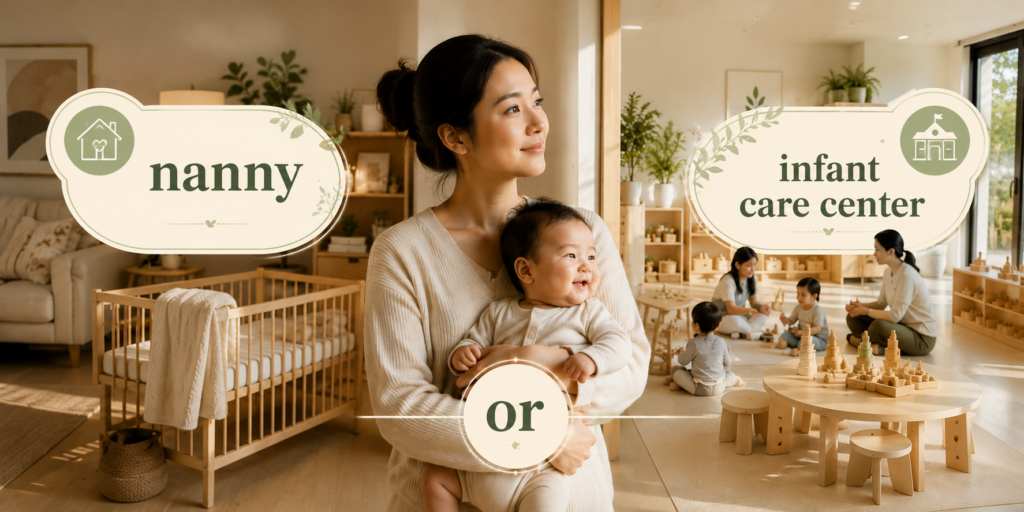
Infant Care vs Nanny in Johor Bahru:
Which is better for Your Baby?

Choosing between a nanny and an infant care center is one of the biggest decisions many working parents face after having a baby.
In Johor Bahru, both options are common. For families balancing demanding careers, daily commuting, and childcare support, finding the perfect fit is crucial. Some parents prefer the comfort of home-based nanny care, while others feel more reassured by a structured, professional infant care environment.

The truth is: There is no single solution that fits every family.
However, understanding the core differences between both caregiving approaches will help you make an informed and confident decision for your baby’s early years.

infant care vs nanny in Johor Bahru
Topic Infant CareNanny Care
1. ExperienceCertified infant care knowledgeBase on parents / nanny experience
2. SupervisionTeam-based caregiving and monitoringOne nanny caregiving
3. Caregiver BackupBackup support availableDepends on one nanny
4. Hygiene SystemStructured cleaning and SOP routinesDepends on nanny practices
5. Sick ManagementSick prevention & isolation proceduresOnly get in touch with nanny
6. Social InteractionBabies may interact with other childrenLimited social exposure
7. Daily RoutineMore structured feeding and nap schedulesMore flexible routines
8. Parent UpdatesSome centers provide apps and reportsDepends on nanny communication
9. Safety SystemCCTV, baby gates, secure entry systemsDepends on home setup
10. MultitaskingOnly focus on infant careHouse work, pets feeding, watering plants
11. Emotional FamiliarityNew environment for babyFamiliar home environment
12. FlexibilityFixed operating hoursMore flexible
13. Stability for Working ParentsTeam support may reduce disruptionsCare may stop if nanny is unavailable
14. Cost StructureStructured monthly feeSalary + accommodation + other expenses
Suitable ForParents seeking a fully managed,
professional caregiving system without
the mental load of planning, training,
or managing staff.
Dedicated house space for baby is available,
Well setup for baby friendly environment,
Well traiend / experienced nanny is available.
Daily SOP is applied

Infant Care vs Nanny In Details:

1. Daily Supervision and Accountability

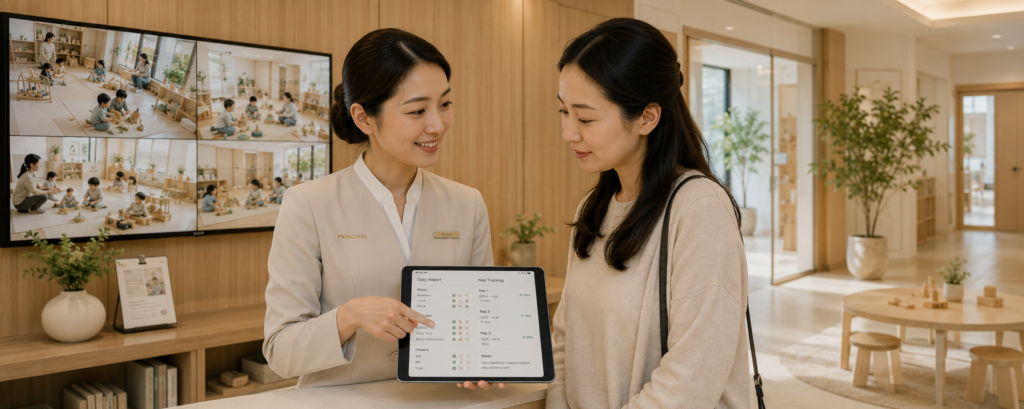
In a professional infant care setting, caregiving routines are highly structured and supervised by a team. This typically includes:
1. Daily reporting systems and logs
2. Strict Caregiver Standard Operating Procedures (SOPs)
3. Detailed feeding and nap tracking
4. CCTV monitoring
5. Transparent parent communication updates

On the other hand, Home nanny care offers:
1. Flexibility – Can be easily request on demand
2. Familiarity – The baby remains within their own private home environment, and the same nanny they use to be
3. Multi Tasking – Simple house cleaning, Pet feeding, Watering the plants…

2. Hygiene and Illness Prevention

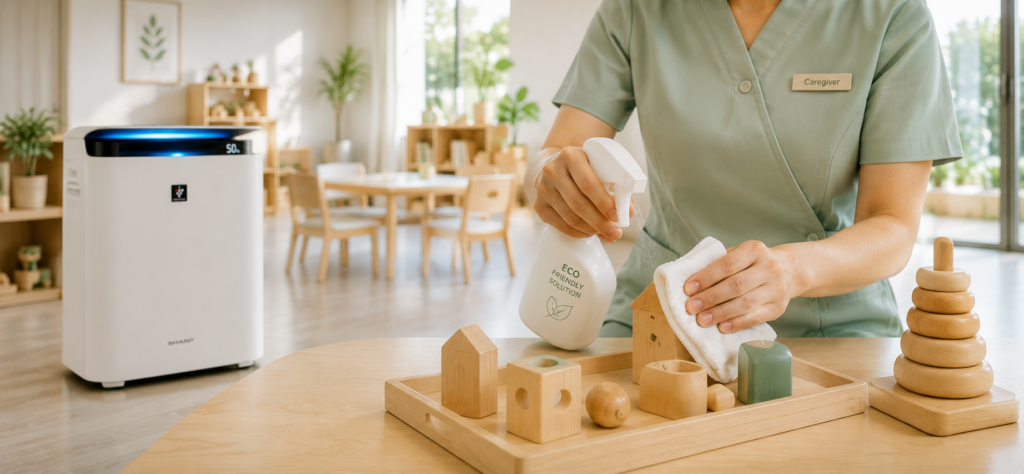
Infant immune systems are delicate, making hygiene a top priority.
1. Infant Care: Premium centers implement rigorous daily sanitization protocols, utilize medical-grade air purifiers for superior
indoor air quality, follow strict bottle-handling procedures, and have a dedicated sick isolation area (Sickbay) to prevent
cross-infection.

2. Nanny Care: Hygiene standards rely entirely on the individual nanny’s personal habits and the overall cleanliness of your home.

3. Caregiver Backup and Operational Stability

Another important difference between nanny care and infant care is caregiving continuity.
When families rely on a single nanny, unexpected situations such as illness, emergencies, sudden leave, or resignation may
sometimes disrupt caregiving arrangements.
For working parents, last-minute childcare disruptions can create considerable stress and scheduling challenges.
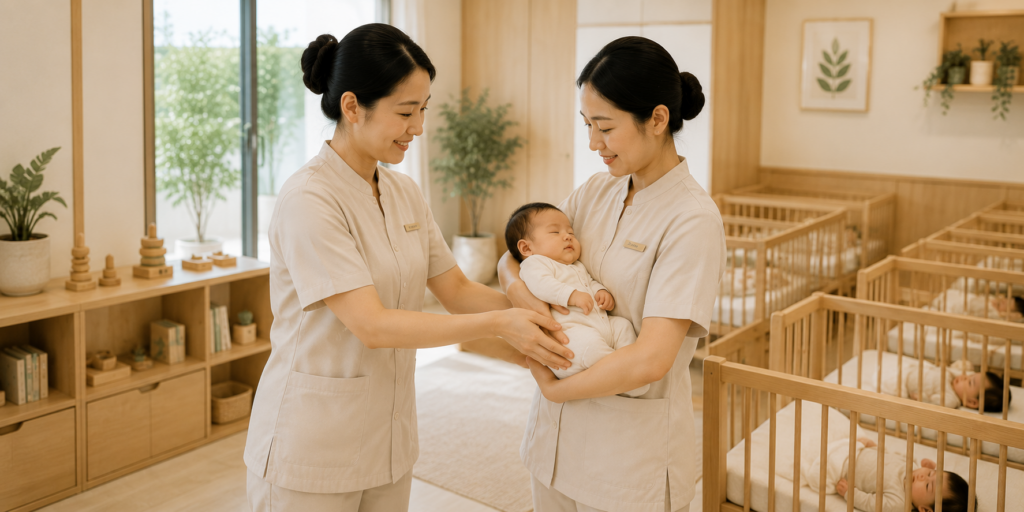
In structured infant care environments, caregiving responsibilities are usually supported by a wider team system.
This may provide:
1. Backup caregiver support
2. More operational continuity
3. Reduced dependency on a single individual
4. Greater schedule stability
For some families, this team-based structure offers additional peace of mind, especially when both parents have demanding
work commitments.

4. Social Interaction and Development

As babies grow older, social exposure and interaction may gradually become more relevant.
In nanny care arrangements, babies typically spend most of their day in smaller and quieter home settings.
This may feel emotionally calming for certain babies, especially younger infants.
Infant care environments may expose babies to:
1. Group routines
2. Social observation
3. Sensory activities
4. Interaction with caregivers and peers
5. Different emotional and communication experiences
During the toddler stage, some children may gradually benefit from observing and interacting with other children in
supervised environments.
However, every baby’s personality and developmental pace is different.
Some babies adapt quickly to social environments, while others may require more time and emotional support.

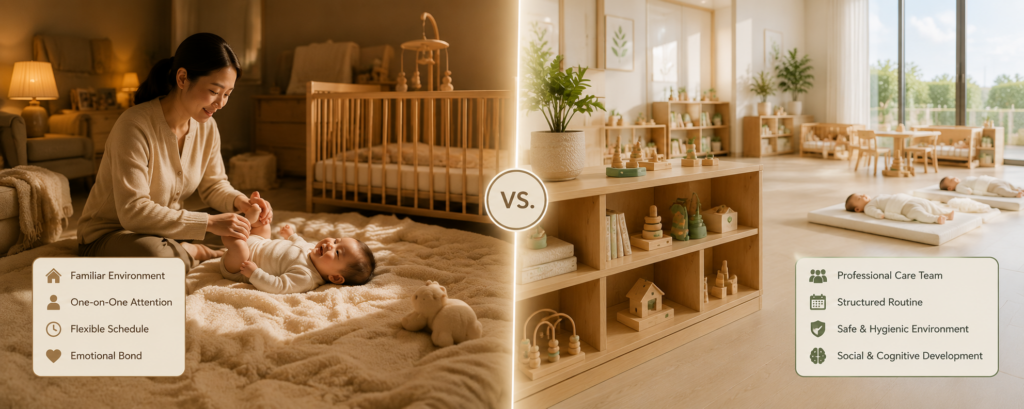
5. Home Comfort vs Structured Environment

One of the biggest differences between nanny care and infant care is the caregiving environment itself.
With nanny care, babies usually remain in their own home environment, which may feel emotionally familiar and comfortable
— especially during the early months.
Home surroundings can sometimes help reduce overstimulation and maintain existing feeding or sleeping routines more naturally.
Infant care centers, on the other hand, usually provide a more structured caregiving environment with consistent schedules,
organized routines, and designated infant spaces.
This may include:
1. Scheduled feeding routines
2. Nap routines
3. Developmentally appropriate sensory activities
4. Dedicated sleep areas
5. Supervised infant zones
For some babies, predictable routines and consistent structure may support smoother daily transitions over time.
Some families value familiarity, while others value structure and routine. Both priorities are understandable.

6. Cost Considerations in Johor Bahru

For many families in Johor Bahru, childcare decisions are also influenced by budget and lifestyle considerations.
Nanny care — especially full-time or live-in arrangements — may involve:
1. Salary costs
2. Accommodation
3. Meals
4. Agency fees
5. Work permit management
6. Insurance or medical expenses
Infant care centers may provide more structured pricing models depending on operating hours, caregiver ratios, and facilities.
Ultimately, the “better” option is not always the cheaper or more expensive one — but the one that best aligns with the family’s
needs, routines, and level of comfort.

Final Thoughts

Both nanny care and infant care can play meaningful roles in supporting young families.
What matters most is whether the caregiving environment feels safe, emotionally supportive, hygienic, and trustworthy
for both the baby and the parents.
During the first few years of life, babies rely heavily on responsive caregiving, emotional security, consistency, and daily routines.
Parents should take time to ask questions, observe carefully, and choose an environment where they genuinely feel
peace of mind.
Because when babies are still this small, trust matters more than anything else.

Scroll to Top